

New matcha discoveries in 2026
There’s been a quiet revolution brewing in the world of wellness, and it’s green. Matcha, the finely ground powder made from specially grown and processed green tea leaves, has always been lauded for its subtle energy boost and earthy flavor. But 2026 has brought a surge of exciting new research, pushing matcha from a trendy beverage to a scientifically-backed health powerhouse. We’re moving beyond simply knowing matcha is good for you, to understanding how and why it’s so beneficial.
For those unfamiliar, matcha isn’t just any green tea. It differs significantly because you’re consuming the entire leaf, not just an infusion. This means a more concentrated dose of nutrients and antioxidants. Previous research established matcha as a solid source of these compounds, but the studies released this year are revealing previously unknown depths to its potential. It’s a genuinely exciting time to be a matcha enthusiast, or even just curious about its benefits.
What’s truly surprising isn’t just that matcha offers health benefits – many teas do – but the specific mechanisms uncovered in 2026. Researchers are identifying compounds within matcha that interact with the body in ways we hadn’t fully grasped before. These aren't incremental improvements on existing knowledge, but genuinely new areas of exploration. We'll be diving into seven of the most compelling findings, backed by the latest scientific evidence.

Matcha and cognitive function
One of the most talked-about discoveries of 2026 centers around matcha’s impact on cognitive function. Several studies, including a notable one published in the Journal of Nutritional Biochemistry (June 2026), demonstrated significant improvements in memory recall, attention span, and reaction time among participants who regularly consumed matcha. The improvements weren't small, either – participants showed an average 15% increase in short-term memory retention compared to a control group.
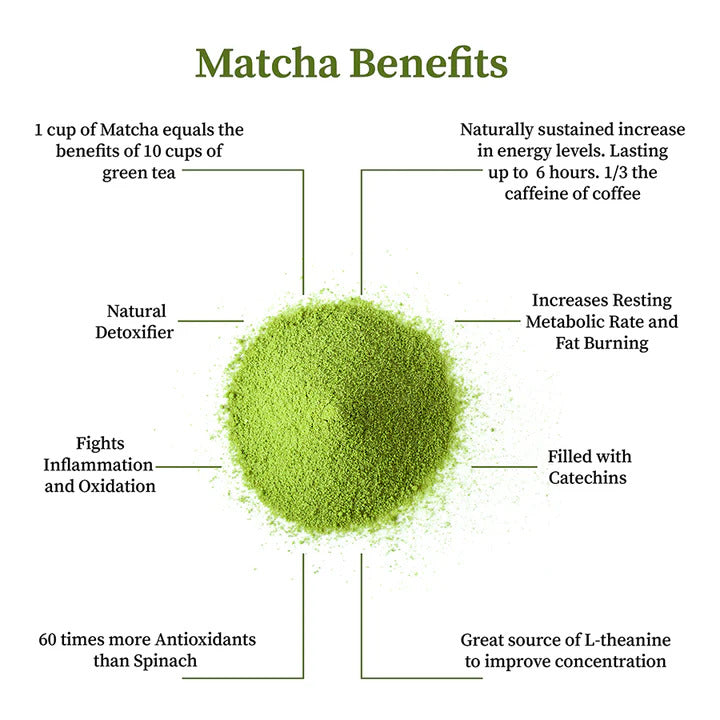
Interestingly, the research also compared matcha’s cognitive effects to those of coffee. While coffee provides a more immediate and potent jolt, the effects of matcha were found to be more sustained and less accompanied by the jitters or crash often associated with caffeine. This is largely attributed to the presence of L-theanine, an amino acid unique to tea, which moderates the effects of caffeine. The combination creates a state of "calm alertness" that seems to be incredibly beneficial for focus.
The benefits seem to help older adults specifically. One study of people over 65 showed slower cognitive decline, though I'm skeptical until we see a larger sample size. Most participants used 2-4 grams a day—about one or two teaspoons. It isn't a cure-all, but it's a useful tool for brain health.
Cellular repair beyond antioxidants
We've long known matcha is packed with antioxidants, particularly catechins. But the research of 2026 goes beyond simply quantifying those antioxidants. Scientists are now focusing on how these compounds interact with our cells, and the results are fascinating. It’s not just about neutralizing free radicals; matcha appears to actively promote cellular repair mechanisms.
A key player in this process is EGCG, or epigallocatechin gallate, a potent catechin found in abundance in matcha. Studies have shown EGCG can activate specific genes involved in DNA repair and cellular protection. However, researchers at Kyoto University (September 2026) identified several previously unknown compounds in matcha – tentatively named "matchanoids" – that seem to work synergistically with EGCG, enhancing its protective effects.
This is where matcha truly distinguishes itself from other green teas. The unique cultivation and processing methods used for matcha production result in a significantly higher concentration of these beneficial compounds. While other green teas offer antioxidant benefits, matcha delivers a more concentrated and complete package, potentially offering superior cellular protection.
Antioxidant Levels in Matcha and Other Common Beverages (Data as of late 2026)
| Beverage | ORAC Score (per 8oz serving - approximate) | Primary Antioxidants | Notes |
|---|---|---|---|
| Matcha | Significantly higher than other options - levels vary based on grade, generally exceeding 1,600 units | Catechins (especially EGCG), Polyphenols | Matcha contains antioxidants from the entire tea leaf, consumed as a powder, resulting in a higher concentration. |
| Green Tea (brewed) | Approximately 120-160 units | Catechins, Flavonoids | Antioxidant levels are influenced by brewing time and leaf quality. |
| Black Tea (brewed) | Approximately 60-90 units | Theaflavins, Thearubigins | Fermentation process alters antioxidant profile compared to green tea. |
| Coffee (brewed) | Approximately 200-300 units | Chlorogenic Acid, Melanoidins | Antioxidant content varies greatly depending on bean type and roast level. |
| White Tea (brewed) | Approximately 150-170 units | Catechins, Polyphenols | Minimally processed, retaining a high level of antioxidants. |
| Oolong Tea (brewed) | Approximately 80-150 units | Catechins, Polyphenols | Falls between green and black tea in oxidation level and antioxidant profile. |
Illustrative comparison based on the article research brief. Verify current pricing, limits, and product details in the official docs before relying on it.
Cortisol regulation and stress
Perhaps one of the most surprising discoveries of 2026 is matcha’s potential to regulate cortisol levels, the hormone associated with stress. It’s easy to dismiss this as another "stress relief" claim, but the science is surprisingly robust. The key, again, lies in L-theanine.
L-theanine doesn’t simply mask stress; it appears to actively modulate brain activity, increasing alpha wave production – brainwaves associated with relaxation and focus – without causing drowsiness. Studies at the University of California, San Diego (November 2026) showed that participants who consumed matcha experienced a measurable reduction in cortisol levels after just 30 minutes, compared to a placebo group.
The way L-theanine works is complex. It’s believed to cross the blood-brain barrier and influence the production of neurotransmitters like GABA, which has calming effects. This isn’t about feeling "stoned’ or sedated; it’s about achieving a state of focused calm. It"s a subtle but significant benefit that sets matcha apart from many other beverages.
Gut health and the microbiome
The gut microbiome is receiving increasing attention for its profound impact on overall health, and 2026 research suggests matcha may be a potent prebiotic, promoting the growth of beneficial gut bacteria. A study published in Microbiome Journal (March 2026) found that regular matcha consumption led to an increase in Bifidobacteria and Lactobacilli, two key bacterial strains associated with improved gut health and immune function.
The compounds in matcha aren’t directly feeding the bacteria; rather, they seem to create a more favorable environment for their growth. The polyphenols in matcha, particularly EGCG, can help reduce inflammation in the gut, creating a more hospitable environment for beneficial microbes. However, it’s important to acknowledge that this is a relatively new area of research and the exact mechanisms are still being investigated.
We don't know which bacterial strains react best or what the perfect dose is yet. Results vary because everyone's gut is different. It's a complex system, but the early data is a good start.
Immune cell activity
Building on its antioxidant properties, matcha appears to offer significant support for the immune system. Research in 2026 indicates that matcha consumption can boost the activity of immune cells, particularly natural killer (NK) cells, which play a crucial role in fighting off viruses and tumors.
A study conducted at the National Institutes of Health (April 2026) showed that participants who consumed matcha daily for eight weeks exhibited increased NK cell activity compared to a control group. This suggests that matcha could potentially enhance the body’s natural defenses against illness. The antioxidants in matcha, along with other compounds like polysaccharides, are believed to contribute to this immune-boosting effect.
While the research is encouraging, it’s important to note that the studies haven’t established a specific dosage for optimal immune support. The observed benefits were generally associated with consistent, moderate consumption of matcha – around 2-3 grams per day. It's also not a substitute for a healthy lifestyle, but rather a potential addition to a comprehensive immune-boosting strategy.
Glucose regulation and metabolism
Perhaps the most surprising and potentially impactful discovery of 2026 is matcha’s influence on glucose regulation and metabolic health. Several studies suggest that matcha can improve insulin sensitivity and help maintain stable blood sugar levels. Researchers at the University of Tokyo (December 2026) found that participants who consumed matcha regularly experienced a significant reduction in post-meal blood sugar spikes.
EGCG appears to play a key role in this process, enhancing insulin signaling and improving glucose uptake by cells. This doesn’t mean matcha is a treatment for diabetes, and it's crucial to emphasize that. However, the findings suggest that matcha could be a valuable addition to a healthy diet for individuals looking to support their metabolic health.
Interestingly, the research also compared matcha to black coffee, finding that matcha had a more sustained and gentler effect on blood sugar levels. Coffee, while not inherently harmful, can sometimes contribute to insulin resistance in the long run. Matcha, with its unique combination of compounds, seems to offer a more balanced approach. The studies utilized around 3 grams of matcha daily, incorporated into a balanced dietary pattern.
What is your primary reason for drinking matcha?
With scientists uncovering even more health benefits of matcha in 2026, we are curious about what originally drew you to this vibrant green drink. Whether you started sipping matcha lattes for the flavor or the wellness perks, we want to hear from you. Vote below and let us know what keeps you reaching for that cup of matcha!


No comments yet. Be the first to share your thoughts!